
Joint Ventures in Türkiye: Structure, Shareholders’ Agreement and Exit (2026)
Tercan Legal — Turkish corporate lawyers for foreign investors, Istanbul, since 2013
Author: Av. Mithat Tercan · Istanbul Bar Association, Reg. No. 45421 · Verify at the official Bar roster: istanbulbarosu.org.tr/levha
A good Turkish partner gives you in one year what you would build alone in five: market knowledge, licences, distribution, relationships. A bad JV structure gives the same partner control over your money. The difference between the two is not trust — it is one document: the shareholders’ agreement. Here is how we build JVs for foreign investors, and the clauses we refuse to leave out.
Two Ways to Structure It
| Structure | When it fits |
|---|---|
| Equity JV — a jointly-owned A.Ş. | The standard. Ongoing business, shared profits, employees, licences. Everything below assumes this. |
| Contractual JV / consortium | One project, defined end date — construction, tenders, a single supply contract. No company, just a detailed contract splitting work, revenue and liability. |
Setting Up the JV, Step by Step
- Term sheet first. Shareholding split, board seats, who contributes what (cash, licences, brand, machinery) and how contributions are valued — agreed on two pages before lawyers draft two hundred.
- Due diligence on your partner. Yes, even a friendly one: litigation, enforcement files, tax standing, whether the licences they promise actually exist and transfer.
- Shareholders’ agreement — negotiated and signed. This is the document. Checklist below.
- JV company established (usually an A.Ş.) with articles of association mirroring the agreement wherever Turkish law lets them — mirrored clauses bind third parties, private ones bind only the partners.
- Contributions completed. Cash to the blocked account; in-kind contributions (machinery, real estate, IP) via court-appointed valuation as the Commercial Code requires.
- Governance goes live. Board formed, signature authorities split so that no single side moves money alone, reporting calendar fixed.
The Shareholders’ Agreement — Non-Negotiable Clauses
📋 What must be in it before you sign anything
☐ Board composition and quorum that reflect the deal, not the default law
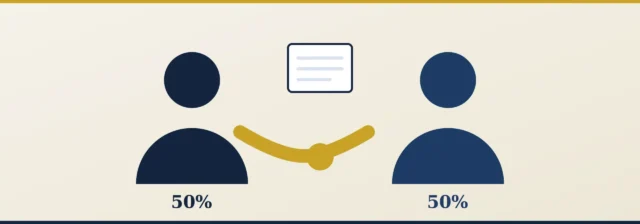
☐ Deadlock mechanism — escalation, then a buy-sell (Russian roulette / Texas shoot-out) or third-party valuation; 50/50 with no deadlock clause is a lawsuit on a timer
☐ Exit rights — put/call options, drag-along, tag-along, and how shares are valued on exit
☐ Non-compete and non-solicitation for both sides, with real penalties
☐ Dividend policy in numbers, not intentions
☐ Anti-dilution — capital increases need your consent or pre-emption fully protected
☐ Dispute clause — arbitration (Istanbul/ISTAC or ICC), seat and language fixed now
The Mistake We See Every Time
The foreign partner signs the Turkish side’s “standard” articles of association, plans to “sort the details later”, and wires the capital. Later never comes. Two years on, a capital increase they cannot block dilutes them, or the general manager (the partner’s cousin) signs contracts they never see. Every JV dispute we litigate starts here. The shareholders’ agreement costs a fraction of one board dispute — sign it before the money moves, or accept that the articles, and Turkish default law, are your only protection.
Frequently Asked Questions
Do I need a Turkish partner to do business in Türkiye?
Legally, no — 100% foreign ownership is allowed. Commercially, a partner can be the fastest route into licences and distribution. This guide is for when the partner makes sense.
Is a shareholders’ agreement enforceable in Türkiye?
Yes, between the partners — and its key protections should also be mirrored into the articles wherever the Commercial Code permits, so they bind everyone.
What happens in a 50/50 deadlock?
Without a deadlock clause: paralysis, then court. With one: the mechanism you chose — escalation, buy-sell or valuation — resolves it in weeks.
Can I exit if the partnership fails?
Only as well as your exit clauses allow. Put options, drag/tag rights and a valuation method must be in the agreement from day one — they cannot be negotiated during the fight.
Can the JV agreement be under foreign law?
The shareholders’ agreement can choose foreign law and arbitration; the company itself lives under Turkish law. We structure the two layers so they do not contradict each other.
Related Guides (Internal Links)
- Investing in Türkiye: Steps, Documents and Costs — Main Guide
- Company Establishment in Türkiye: LLC vs Joint Stock
- Buying a Company in Türkiye: Share Purchase & Due Diligence
One POA. One Team. Done.
Send us your term sheet — or just the shareholding split you have in mind. Within 48 hours you get our clause list, the risks we see, and a fixed fee — in writing.
📩 info@tercanlegal.com · 🌐 www.tercanlegal.com · 📍 Istanbul, Türkiye
Legal Disclaimer: This guide is provided for general information purposes only and does not constitute legal advice. Turkish legislation, thresholds and official fees change frequently; figures cited reflect the position at the date of publication and should be verified for your specific transaction. No attorney–client relationship is created by reading this material. For advice on your particular situation, please contact Tercan Legal directly. © 2026 Tercan Legal. All rights reserved.